
Worship in Unitarian Universalist congregations is shaped by a blend of shared theological commitments and local culture. Across the Greater Cincinnati congregations—First Unitarian Church of Cincinnati, The Gathering at Northern Hills, Harmony UU, Heritage UU, Hopedale UU, and St. John’s UU—you’ll find a recognizable Unitarian Universalist pattern: services that center reflection, ethical living, and community connection rather than doctrinal conformity. Yet each congregation expresses this pattern with its own tone, liturgical creativity, and sense of place.
Most UU worship services begin with a gathering moment that signals a shift from everyday busyness into communal presence. This often includes lighting the Chalice, the central symbol of Unitarian Universalism. The words spoken at the chalice vary—some congregations use a familiar refrain each week, while others rotate readings to reflect themes such as justice, compassion, or spiritual grounding. In a region with both long‑established churches (like First Unitarian and St. John’s) and newer communities (like Harmony), the style of chalice lighting can range from traditional to contemporary.
Music is another defining element. UU congregations typically draw from a wide repertoire: hymns from Singing the Living Tradition, folk music, spirituals, contemporary compositions, and occasionally secular songs that speak to the theme of the service. A congregation like Heritage UU, known for its strong sense of community identity, might lean into music that reinforces shared values, while a community such as The Gathering at Northern Hills—historically known for its humanist orientation—may incorporate pieces that emphasize reason, ethics, and social engagement.
The heart of the service is the sermon or message, but “sermon” in UU contexts is a flexible term. Ministers and lay leaders alike craft reflections that draw from philosophy, world religions, poetry, science, and current events. Because these congregations are theologically diverse—ranging from humanist to theist to earth‑centered—the tone of the message shifts accordingly. One Sunday might explore the teachings of Buddhism; another might examine racial justice, climate ethics, or the meaning of hope in uncertain times.
A hallmark of UU worship is participatory ritual. Many congregations include a “Time for All Ages,” inviting children into the service before they head to religious education. Joys and Sorrows (or “Milestones”) is another common practice, offering space for congregants to share personal celebrations or struggles. This ritual reinforces the UU belief that community is built through mutual care rather than shared creed.
Finally, worship often concludes with a benediction or closing words, followed by extinguishing the chalice. The mood is intentionally communal: people linger, talk, and reconnect. In congregations like Hopedale or Harmony—smaller, more intimate communities—this post‑service time is as essential as the formal liturgy.
Across these Greater-Cincinnati‑area UU congregations, worship is less about uniformity and more about cultivating meaning, ethical reflection, and belonging. Each community brings its own voice, but all share the UU commitment to a free and responsible search for truth.
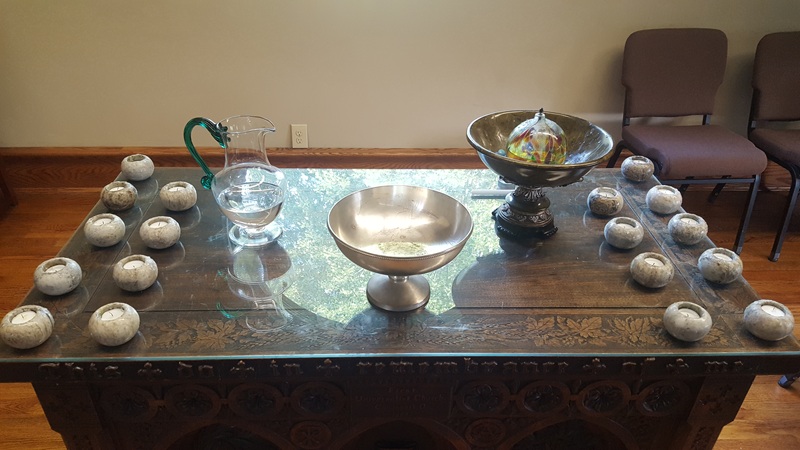
Photo: Altar of a Cincinnati-area UU church. Photo courtesy of Russ Araujo.
Return to the homepage. Return to UU Church Life.